
Today, organizations are doing more than ever. There is content, events, interviews, LinkedIn posts, and internal communication. Yet one challenge appears again and again. Efforts are fragmented, and visibility does not accumulate.
From my experience working with leaders and teams, the issue is rarely a lack of activity. It is a lack of connection between what already exists.
When ideas are not repeated across touchpoints, they do not build trust. They disappear. When the same idea appears in different contexts, people begin to recognize it, remember it, and trust it. That is where discoverability begins.
Why discoverability matters today
People search before they ask. More often, the first selection happens not only in a person’s mind, but also in AI environments. AI tools analyze content, profiles, and signals to recommend experts, companies, and solutions. If your presence is not clear and consistent, you are not included in that process. Discoverability today means not only being visible to people, but also being understandable to AI. If the platform cannot understand what you stand for, it cannot recommend you.
What discoverability actually means
Discoverability is a strategic approach where organizations and leaders build visibility through consistent, repeated presence across multiple channels and touchpoints.
It is not only about being found. It is about being encountered. Repeatedly. In different formats. In different contexts. On LinkedIn, in conversations, in events, in recommendations. Over time, this creates a clear impression: These people think clearly and consistently.
For businesses, this means:
ideas do not disappear after one post
leadership voice is not occasional
presence becomes continuous
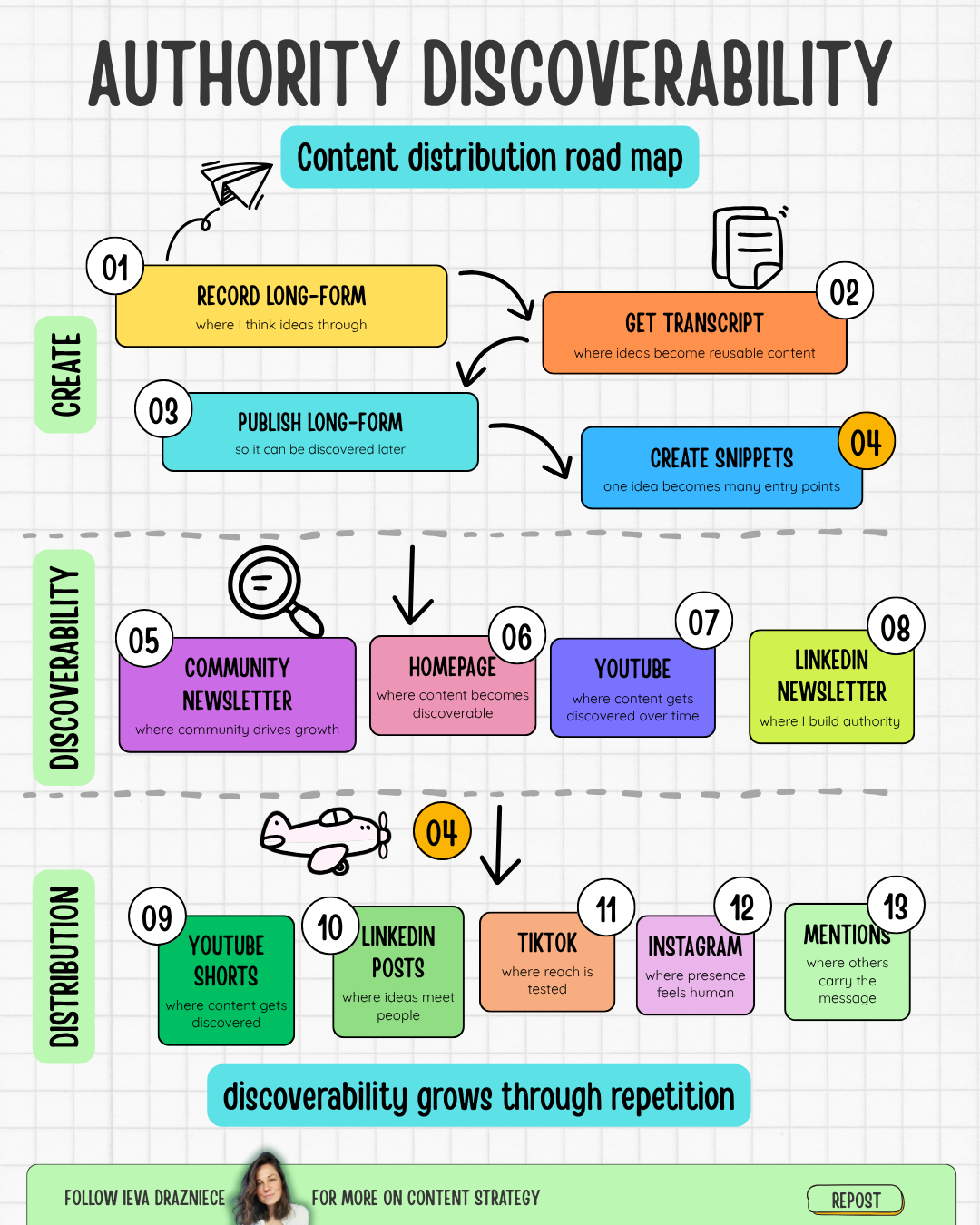
How discoverability is built
Discoverability is built from five connected elements:
clear topics
leadership voice
movement of ideas across channels
conversations with the audience
consistency over time
If one element is missing, visibility becomes fragmented. If they work together, recognition and authority begin to form.
What LinkedIn has changed
LinkedIn has moved from visibility to professional relevance.
The platform evaluates:
what topics you speak about
how consistent you are
the quality of engagement
conversations in comments
your professional network
It no longer looks at a single post. It connects your profile, content, and behavior into one picture to understand where you are relevant and whom to show you to. In practice, LinkedIn has become a professional identity amplifier, if that identity is clear.
What this means for business owners and leaders
This is no longer about planning next week’s posts. It is about building a recognizable line of thinking over time. For businesses and teams, this means:
not only managing channels
but aligning thinking, communication, and presence
When your ideas connect across touchpoints, visibility starts to accumulate.
What it looks like in practice
Often, the first step is not to add more. It is to structure what already exists.
Start with:
1. Define a few core topics
Not everything. Only what you want to be known for.
2. Activate leadership voice
Trust is built through people. This is often the most underused asset.
3. Let ideas move
One idea can:
start as a LinkedIn post
continue in comments
become a blog
be discussed in a meeting or event
This is not more content. It is one idea strengthened across formats.
4. Participate in conversations
Commenting is not an extra activity. It is part of discoverability. Visibility is built not only where you publish, but where you engage.
Looking ahead
This approach is increasingly described as GEO, Generative Engine Optimization.
It means building your presence so both people and AI can:
find you
understand you
recommend you
Discoverability is not about doing more. It is about connecting what you already do. Clear thinking. Consistent presence. Long-term visibility. People no longer decide based on one post or one meeting. They decide based on a feeling built across multiple interactions. If that feeling is clear, you are not only found. You are recommended.
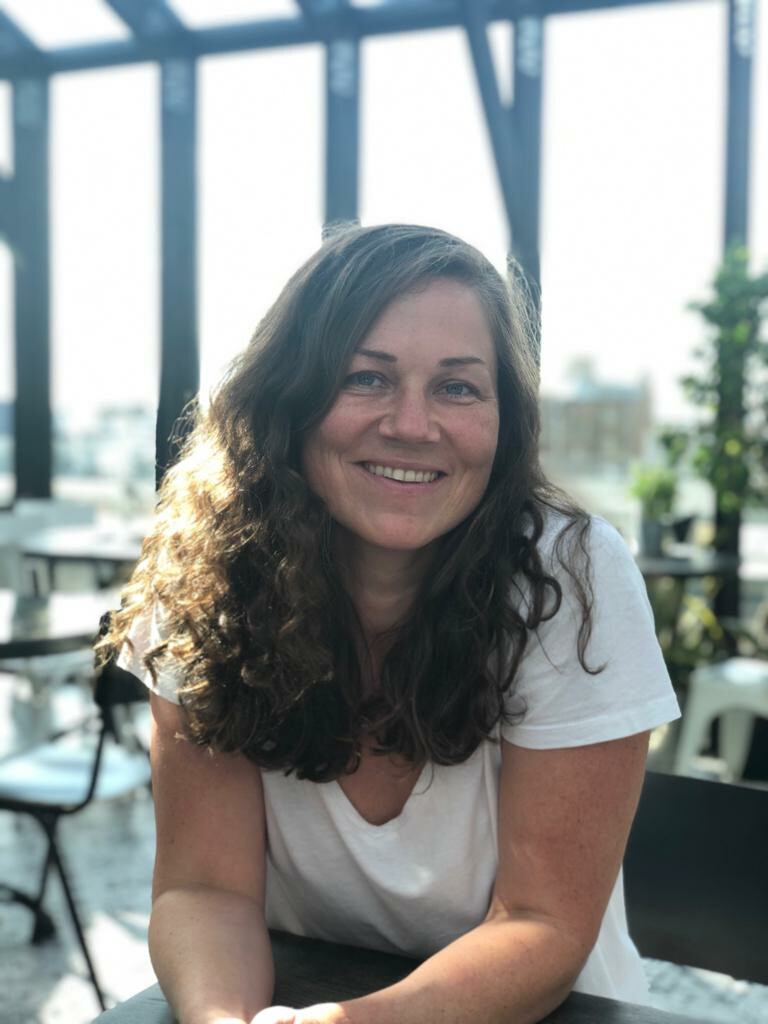
About the author:
Ieva Drazniece works with business owners, executives, and teams to help them become more visible and trusted for what they do. With over 25 years of experience in communication, she helps professionals express their expertise with clarity and show up in a way that feels natural, consistent, and aligned with their goals. Her work focuses on building meaningful presence on LinkedIn and across professional environments, where community and human connection play a key role in how trust is built and opportunities emerge.
Explore her work here.